What Is the EMSA Preventive Health and Safety Course?
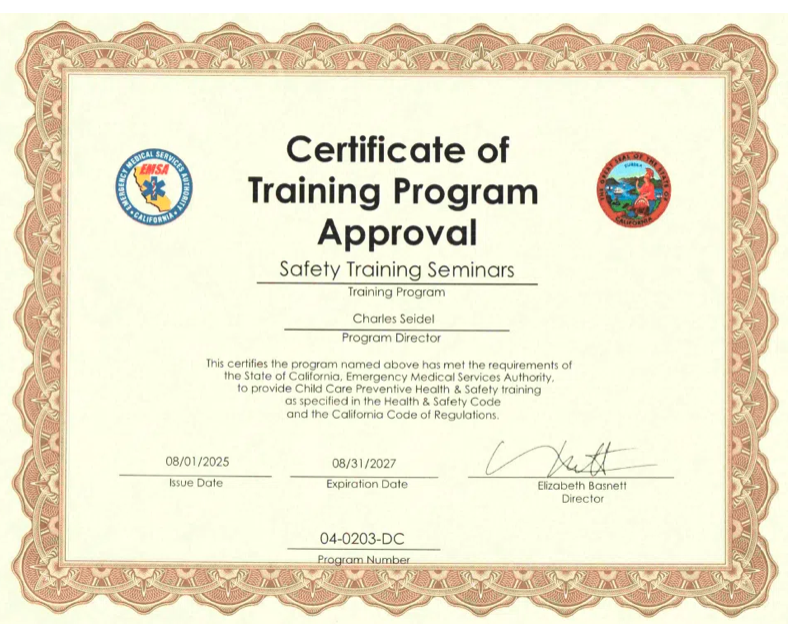
EMSA stands for California’s Emergency Medical Services Authority. The EMSA Preventive Health and Safety Course provides childcare-related education on practices that reduce preventable health risks and support children’s well-being.
The California Childcare Health Program at UCSF identifies three core modules in its EMSA-approved preventive health curriculum: prevention of infectious disease, prevention of injuries, and nutrition. Its seventh-edition curriculum was renewed and approved by EMSA in 2026.
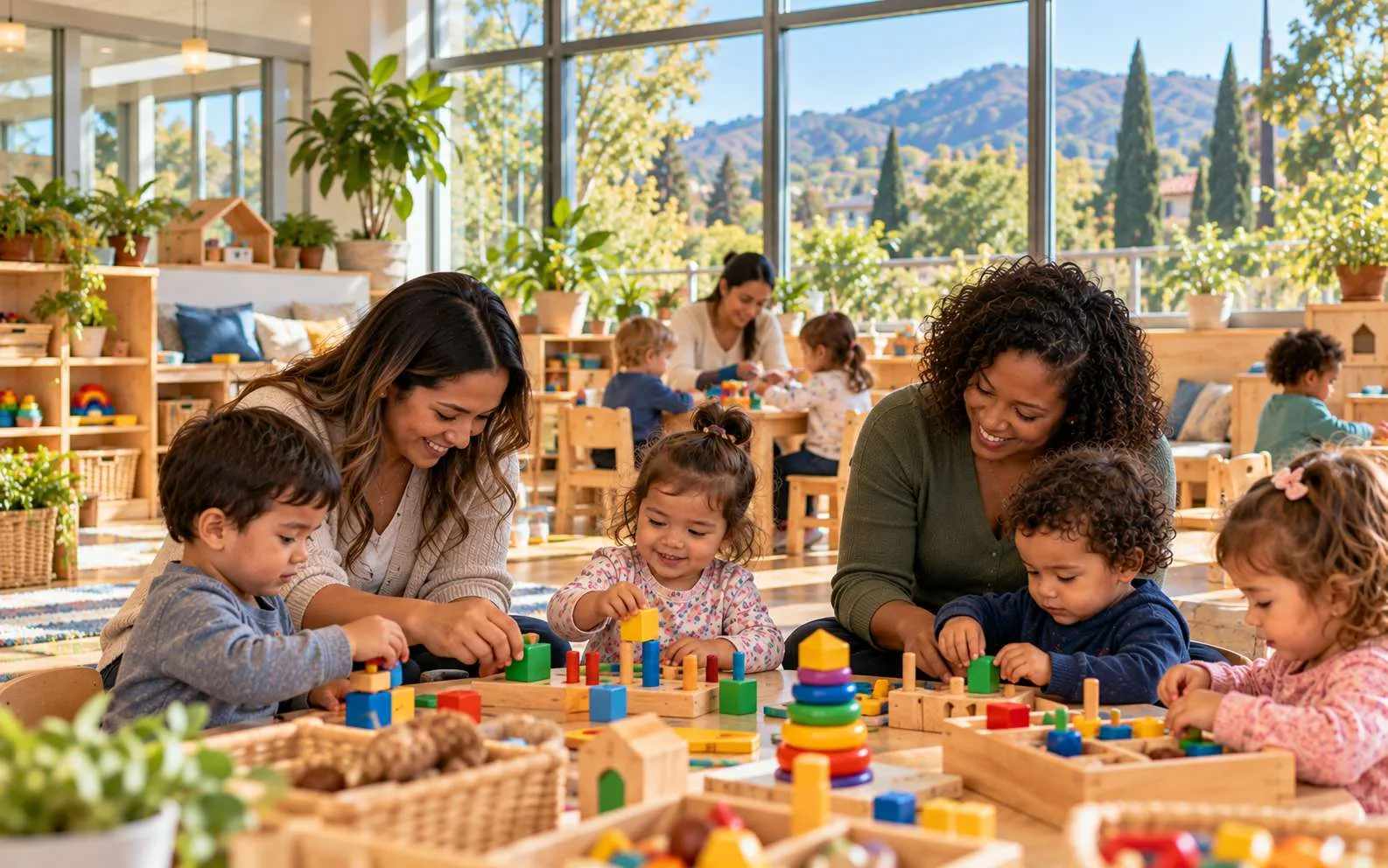
For childcare providers in Danville, these subjects relate directly to daily responsibilities. A provider may need to maintain sanitary play areas, follow safe food-handling practices, supervise children around potential hazards, and recognize when a child may need additional attention.
Preventive Health and Safety education is different from Pediatric CPR and First Aid. These courses address different aspects of childcare health and safety, so applicants should verify whether they need one or multiple training components.
California Childcare Licensing and Required Training
California’s Department of Social Services (CDSS), through Community Care Licensing, oversees licensed Child Care Centers and Family Child Care Homes. California Health and Safety Code Section 1596.866 establishes health and safety training requirements for specified childcare personnel and licensees.
The applicable requirements include pediatric first aid, pediatric CPR, and preventive health practices. The preventive health component addresses infectious disease recognition and prevention, childhood injury prevention, and lead exposure prevention. For covered licenses issued on or after January 1, 2016, the statute also requires at least one hour of childhood nutrition training for the specified director, teacher, or family childcare licensee.
These obligations do not mean that every childcare employee has identical training requirements. The rules depend on the person’s position, facility type, licensing situation, and applicable regulations.
If you are preparing to open a Family Child Care Home in Danville or joining a licensed Child Care Center, check with your licensing representative before enrolling. You can also review California Health and Safety Code Section 1596.866 to understand the statutory framework. This webpage provides educational information, not legal or regulatory advice.
Preventing Infections and Injuries in Childcare Settings
Children frequently share toys, tables, play equipment, and learning materials. Without consistent hygiene practices, infectious diseases can spread through contaminated hands, surfaces, and close contact.
Preventive health education helps childcare professionals understand the value of handwashing, appropriate cleaning routines, safe diaper-changing procedures, and following applicable health guidance when a child becomes ill. Providers also need to communicate relevant health information with families while following appropriate privacy practices.
Injury prevention is another part of childcare safety. Organizing play areas, supervising age-appropriate activities, storing hazardous materials securely, and identifying unsafe equipment can help reduce preventable accidents.
Danville childcare providers may apply these practices in preschools, daycare facilities, and Family Child Care Homes. Although the physical environment differs from one setting to another, consistent procedures help staff recognize hazards and respond appropriately.
Lead Poisoning Prevention in Danville Childcare Facilities
Lead exposure is a significant health concern for young children because it can affect brain development and other aspects of health. Potential sources include deteriorating lead-based paint in older buildings, contaminated dust, and contaminated soil.
Childcare providers can help limit exposure by maintaining clean environments, following appropriate cleaning procedures, and keeping children away from peeling paint, renovation debris, or other suspected hazards. If a potential source of lead is identified, providers should follow appropriate public health guidance and arrange professional assessment when needed.
For Danville childcare facilities, the relevant consideration is the condition of the individual building and surrounding environment, rather than an assumption that every property has the same level of risk. Providers working in older homes or buildings undergoing renovation should pay particular attention to possible environmental hazards.
California’s preventive health training framework includes lead exposure prevention for applicable childcare licensing situations. The California Childcare Health Program’s preventive health training resources provide information about the approved curriculum and lead poisoning prevention content.
Nutrition, Food Allergies, and Children’s Health
Childhood nutrition is an important part of preventive health practices. Childcare professionals may supervise meals and snacks for children with different nutritional needs, food allergies, medical dietary restrictions, and developmental stages.
Age-appropriate meal planning helps providers offer suitable portions and balanced food choices. Safe food preparation and storage practices also reduce the risk of foodborne illness.
Food allergies require careful attention to ingredients, cross-contact prevention, and established procedures for responding to allergic reactions. Children with diabetes may need individualized meal routines or other documented care instructions. Providers should follow the child’s established care plan and communicate concerns to the family rather than independently making medical decisions.
Feeding difficulties and growth concerns also deserve appropriate attention. Childcare professionals can document observations and share concerns with families, while leaving medical assessment to qualified healthcare professionals.
Dental health connects with everyday nutrition, too. Appropriate snacks, sensible food choices, and good oral-health habits can help support children’s developing teeth.
The EMSA preventive health curriculum includes childhood nutrition, making this subject relevant to both home-based providers and staff at Danville Child Care Centers.
Sanitation and Healthy Indoor Environments
Clean childcare environments require consistent routines rather than occasional cleaning. Food preparation surfaces, kitchen equipment, toilets, and diaper-changing areas need appropriate sanitation to help reduce contamination and disease transmission.
Providers should use cleaning and disinfecting products according to their labels, keep chemicals away from children, and follow applicable childcare procedures. Proper waste disposal and pest prevention can also help maintain healthier indoor spaces.
Air quality matters as well. Avoiding secondhand smoke, maintaining clean air filters, and following appropriate ventilation practices can help reduce environmental concerns.
In a Danville Family Child Care Home, a provider may handle meal preparation, diapering, cleaning, and supervision throughout the day. In a larger center, clearly defined staff responsibilities can help ensure that hygiene practices are applied consistently.
Who Should Consider This Training in Danville?
The EMSA Preventive Health and Safety Course may be relevant to people preparing for childcare responsibilities or checking their training requirements, including:
- Family Child Care Home applicants and covered licensees.
- Directors and teachers at licensed Child Care Centers.
- Childcare professionals who need to understand preventive health practices.
- Individuals entering early childhood education.
- Existing providers reviewing their health and safety training documentation.
Danville is part of the San Ramon Valley, where childcare professionals may serve families in both residential and center-based settings. The appropriate course depends on the learner’s role and the requirements that apply to their facility.
Remember that completing a preventive health course does not automatically replace separate Pediatric CPR or First Aid requirements. Confirm the full training combination needed for your licensing or employment situation.
Finding EMSA Training Near San Ramon and Walnut Creek
Danville’s location in Contra Costa County makes it a relevant option for childcare professionals in nearby communities, including San Ramon, Alamo, Walnut Creek, and Lafayette. These communities are part of the wider Central Contra Costa and San Ramon Valley area.
People comparing EMSA training near Danville can consider the local training option alongside other available programs. The right choice depends on the approved curriculum, course format, registration availability, and the learner’s individual requirements.
Danville’s educational environment also includes San Ramon Valley Unified School District, which serves local school communities. This provides context for the area’s broader education environment, but it does not imply that the district partners with or endorses Safety Training Seminars.
Registering With Safety Training Seminars
Safety Training Seminars provides a local option for people researching EMSA childcare health and safety training in Danville. Before registering, confirm that the course is the Preventive Health and Safety program you need and that its current curriculum meets the applicable requirements.
If you are comparing affordable options, review the actual course fee, registration details, delivery format, and completion documentation. Do not assume a particular price, discount, schedule, or licensing outcome without confirmation.
You should also ask whether additional Pediatric CPR or First Aid training is needed. Checking these details before enrollment can help avoid registering for a course that does not satisfy your specific requirement.
Begin Your Childcare Health and Safety Training in Danville
Understanding preventive health practices can help childcare professionals maintain safer environments, support children’s nutrition, and reduce exposure to preventable hazards. For providers in Danville and nearby Contra Costa County communities, choosing the appropriate EMSA training is an important step toward meeting applicable childcare health and safety requirements.
Explore the EMSA Preventive Health and Safety Course through Safety Training Seminars, verify your specific training obligations, and review current registration details before enrolling.